Archive for the ‘Introduction & Personal’ Category
Monday, November 2nd, 2009
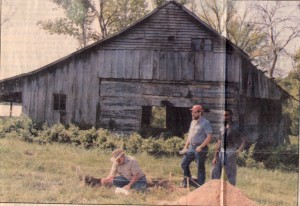
Archaeological Dig at Wessyngton Slave Cabin Site
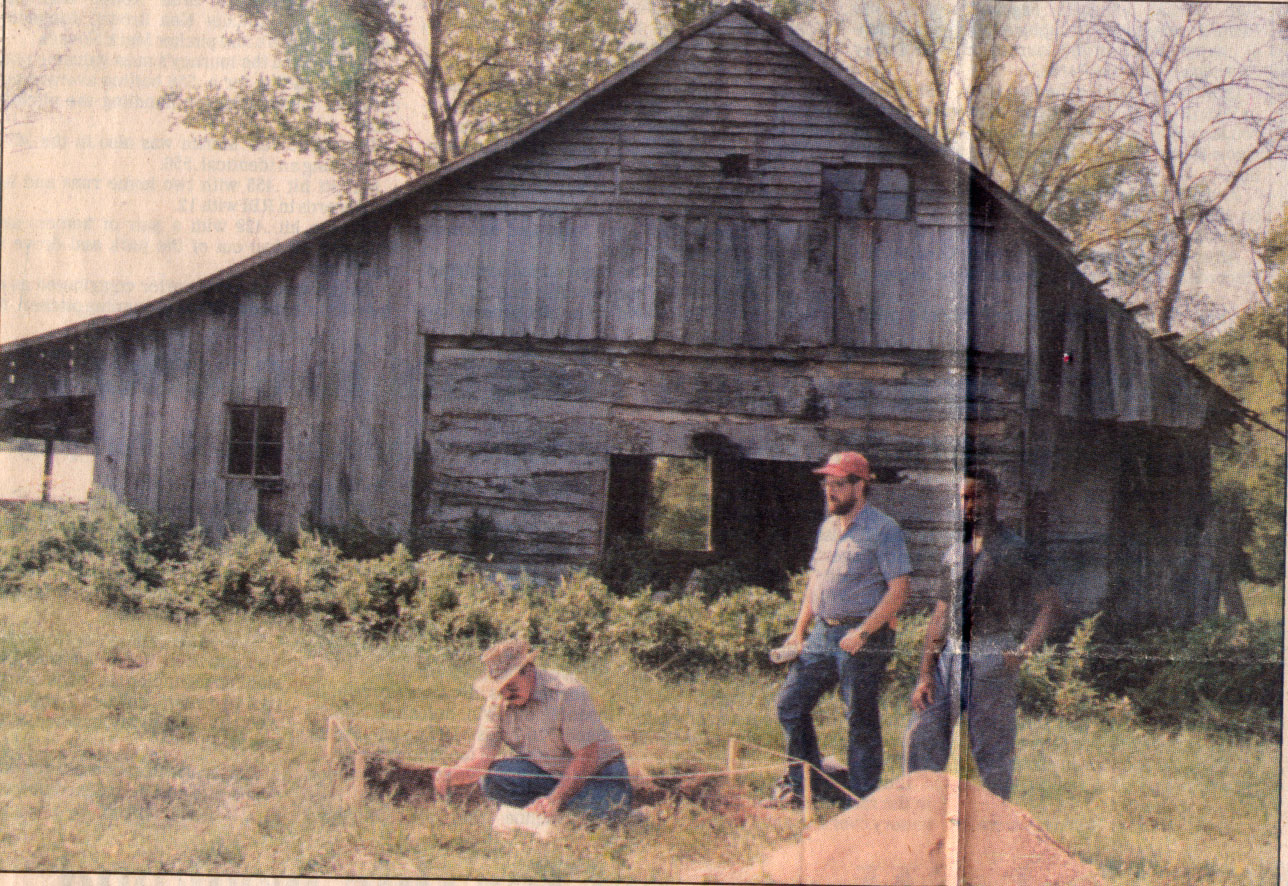
In 1991, I had an opportunity that few historians or genealogists ever have; to literally walk in your ancestors’ footsteps. In 1989 I was approached by the president of the Bloomington-Normal black history Project and director of the Midwestern archaeological research Center, about the potential investigations of the salve cabin area on Wessyngton Plantation to get an interpretation of slave life there. Similar digs have been conducted at the Hermitage, Mt. Vernon, and Monticello.
The actual digging at Wessyngton did not start until 1991. The thought of actually walking in my ancestors’ footsteps and holding objects they used in their everyday lives one hundred years earlier was surreal to me. Three sections of the slave cabin area were selected for exploration. One site was where the cabin of my great-great-grandparents Emanuel and Henny Washington once stood.
The dig yielded fragments of pottery and dishes used by my ancestors as well as coins and arrowheads made by Native Americans.
The photograph above shows the site of the archaeological dig on Wessyngton Plantation where my ancestors once lived.
Tags:African American History, African Slavery, Arrowheads, black history, Black History Month, Civil War, Monticello, Mt. Vernon, Native Americans, Plantation Archaeology, plantation slavery, Slave Cabin, Slave Housing, Slave Life, Tennessee slavery, The Hermitage
Posted in Civil War, Genealogy & DNA, Interviews, Introduction & Personal, Plantation Life, Research | Comments Closed
Monday, October 26th, 2009
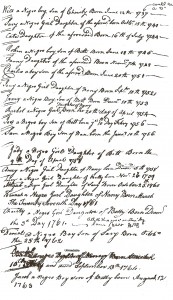
Blow Family Bible
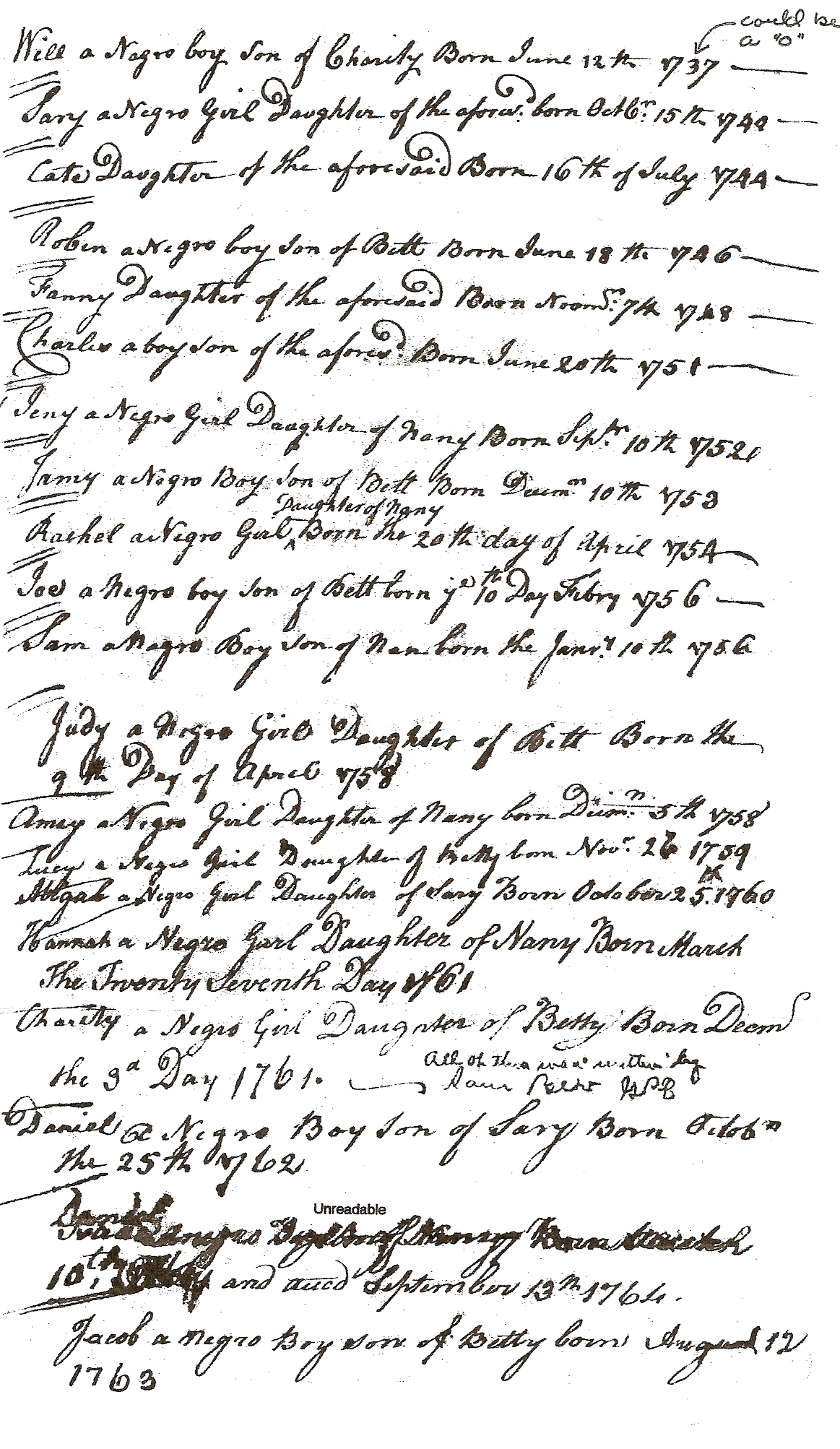
Slave owners kept detailed records of their slaves’ births, and deaths, and purchases; although many of them have not survived. They often recorded these events in their family bibles along with information on their own families.
The 1715 Blow family bible records the births of slaves owned by the Blows of Sussex, and Southampton counties in Virginia. Nineteen births of four mothers are recorded from 1737 to 1763 spanning three generations. This is a goldmine of information for African American research. Descendants of these slaves can be found searching other records in the Blow Family Papers in the Swem Library in Virginia.
Tags:African American History, African American Names, African Slaves, Black Genealogy, Blow Family, Blow Family Bible, family history, family research, Genealogy & DNA, George Blow, Michael Blow, plantation slavery, Richard Blow, Samuel Blow, Slave Bill of Sale, Slave Name Patterns, Slave Names, Slave Records, slave trade, Southampton County Virginia, Sussex County Virginia, Swem Library, Tower Hill Plantation, Transatlantic Slave Trade, Virginia Plantation, Virginia Slavery
Posted in Civil War, Genealogy & DNA, Interviews, Introduction & Personal, Plantation Life, Research | Comments Closed
Friday, October 23rd, 2009
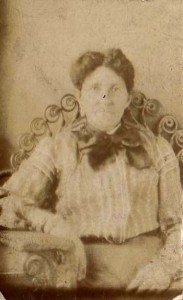
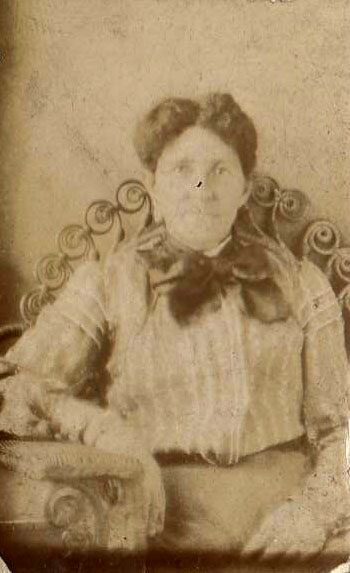
Arry Fort Pitt 1836-1918
Today divorce is very common, but in 1800s and early 1900s it was rarely heard of, especially among African Americans. In my research I found this extraordinary divorce case of two former slaves in Robertson County, Tennessee which detailed the history of their family.
Alford Pitt 1830-1900 and his wife Arry Fort Pitt 1836-1918 were married during slavery and had eleven children. Alford was a carpenter and later accumulated more than 500 acres of land. He had African American and white sharecroppers working his land.
In 1900, Arry filed for divorce from Alford stating that he had an affair with two black women and one white one. She stated that she had worked hard to help him amass everything they owned and she was entitled to half. Alford claimed that she had not helped him accumulate his wealth and felt since they married during slavery and never married after they were emancipated that she was not legally his wife and therefore not entitled to any of his property.
The divorce case put a great strain on the Pitt family, their friends and neighbors. Arry had more than fifty witnesses to prove her claims and Alford had nearly as many to support his. Half the children sided with their mother and the others their father.
Arry was represented in court by a family member of her former owners. In 1866, a law was passed in Tennessee which made all former slave marriages legal if the couple continued to live as man and wife.
The courts ordered Alford to give Arry 100 acres of land, $1,000, a horse and buggy and other livestock. Shortly after the verdict Alford died from complications of a cold that he caught from walking to court in bad weather.
Some of the Pitt property is still owned by their direct descendants. A street that runs through the property bears the family name.
Tags:African American Genealogy, African American History, Black Landowners, Divorce, Divorce Cases, Emancipation, family history, family research, Freedmen, Freedmens Bank, Freedmens Bureau, Genealogy & DNA, Oral History, Pitt Family, Slave Family, Slave Marriage, Slavery
Posted in Genealogy & DNA, Interviews, Introduction & Personal, Plantation Life, Research | Comments Closed
Saturday, October 17th, 2009
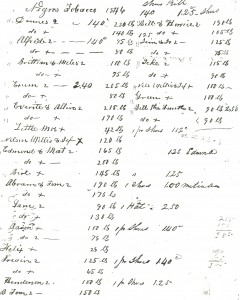
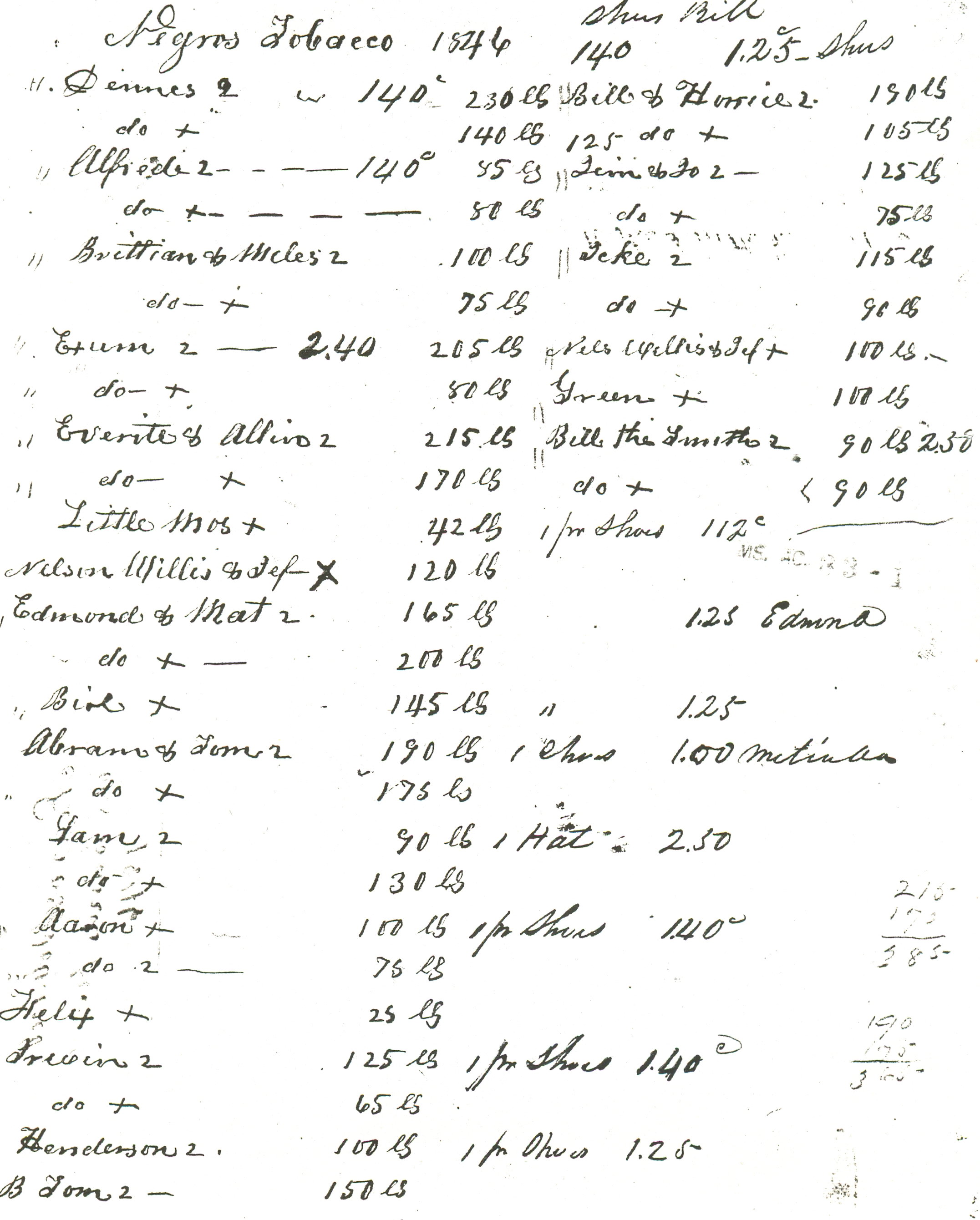
Slaves' Tobacco on Wessyngton Plantation 1846
Enslaved African Americans on Wessyngton Plantation worked under a task system. The plantation owner assigned a task to each individual. Once the task was completed the slave was free to work on his own crops of tobacco if he chose to do so. The owner usually assigned tasks that would take the entire day to complete. However, some of the fastest workers were able to complete the assigned tasks and work for themselves. The slaves were not required to work on Sunday and were off half days on Saturdays. Many of the slaves used this time to cultivate their own crops. The task system required less supervision by overseers than gang labor and gave slaves more control of their time.
The owner kept a list of how much tobacco each person raised and paid them after the crops were sold in New Orleans. The slaves used the money from the sale of the crops to purchase various items not provided by the plantation owner. The document above lists the names of men on Wessyngton Plantation in 1846 who raised their own crops and the items they purchased for their families.
Tags:Add new tag, Field Hands, Gang Labor, Overseer, Plantation Owner, Plantation Production, plantation slavery, Plantation Slaves, runaway slaves, Slave Life, Southern Plantations, Task System, Tobacco Production, Work Songs
Posted in Civil War, Genealogy & DNA, Interviews, Introduction & Personal, Plantation Life, Research | Comments Closed
Wednesday, October 14th, 2009
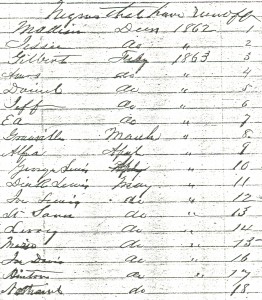
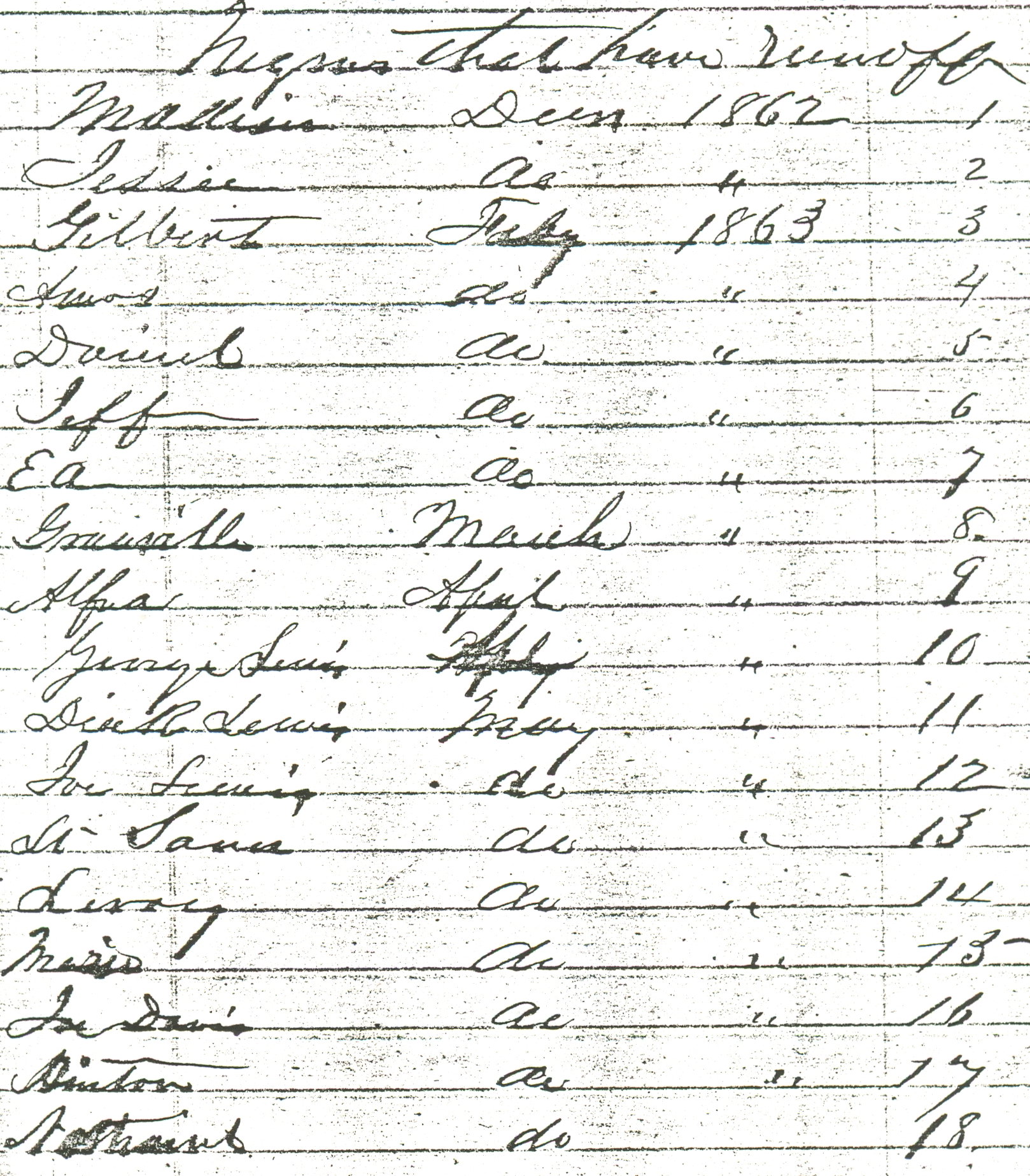
Runaway Slaves from Wessyngton Plantation 1862-1863
President Lincoln’s Emancipation Proclamation, issued September 22, 1862, declared freedom to slaves in the confederate states that did not return to the control of the Union by January 1, 1863. It did not free slaves from the border states Kentucky, Maryland, Missouri, and Tennessee. Many slaves from these states, however, were already free by this time due to self-emancipation─running away or being abandoned by their owners.
George A. Washington realized that his slaves would soon be tempted to leave his plantation Wessyngton. At the same time the Union Army was recruiting black soldiers, George made an offer to hire some of his slaves for a rate of $10 per month. From February through May 1863, twenty-four men agreed to stay on the plantation and work for the offered $10 per month. Of those twenty-four, however; eighteen left within a few months. The men had worked on the plantation all their lives and no doubt wanted to see what the outside world had to offer and to taste freedom. The men must have seen the offered salary as an attempt to keep them on the plantation. The above document lists the eighteen individuals who ran away from Wessyngton Plantation from 1862-1863.
Tags:Abraham Lincoln, Civil War, Confederate Army, Contraband, Contraband Camps, Emancipation, Emancipation Proclamation, plantation slavery, President Lincoln, runaway slaves, Union Army
Posted in Civil War, Interviews, Introduction & Personal, Plantation Life, Research | Comments Closed
Monday, October 12th, 2009
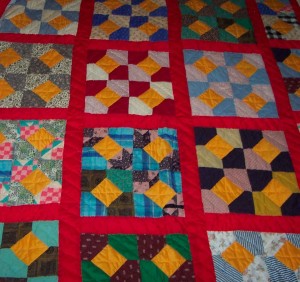
Hand-Stitched Quilt by Maggie Washington
So many of us have quilts or other crafts made by our ancestors. Hopefully we all display them carefully in our homes. But these pieces have stories that need to be preserved as well. This quilt was sewn by my great-aunt Maggie Washington. She made it for me as a birthday gift when she was in her nineties. Aunt Mag learned to make quilts from her mother when she was a small girl and often gave these special gifts to family members and friends on specials occasions such birthdays, weddings and Christmas.
Tags:Arts, Crafts, Maggie Washington, Quilt making, Quilting, Quilts, Sewing, Weaving
Posted in Genealogy & DNA, Interviews, Introduction & Personal, Research | Comments Closed
Sunday, October 11th, 2009
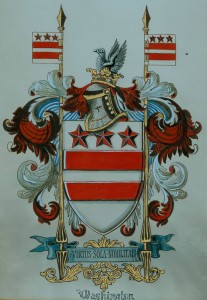
Washington Family Crest
The Washingtons trace their ancestry back to William de Hertburn in twelfth-century England where their family owned a manor estate called Wessyngton─the Norman spelling of Washington. William de Hertburn changed his name to William de Wessyngton. The first Washington to come to America in Joseph Washington’s line was John Washington, who immigrated to Surry County, Virginia, in 1658. One of John’s cousins also named John immigrated to Westmoreland County, Virginia, in 1656. This John Washington was the great-grandfather of President George Washington. Joseph Washington came to Robertson County, Tennessee in 1796 and established Wessyngton Plantation, which he named in honor of his ancestral home.
Tags:Ancestral Home, Ancestry, President George Washington, Sulgrave Manor, Surry Washingtons, Washington family, Washington genealogy, Wessyngton Manor, Westmoreland Washingtons, William de Hertburn, William de Wessyngton
Posted in Civil War, Genealogy & DNA, Interviews, Introduction & Personal, Plantation Life, Research, Uncategorized | Comments Closed
Monday, October 5th, 2009
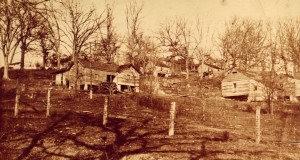
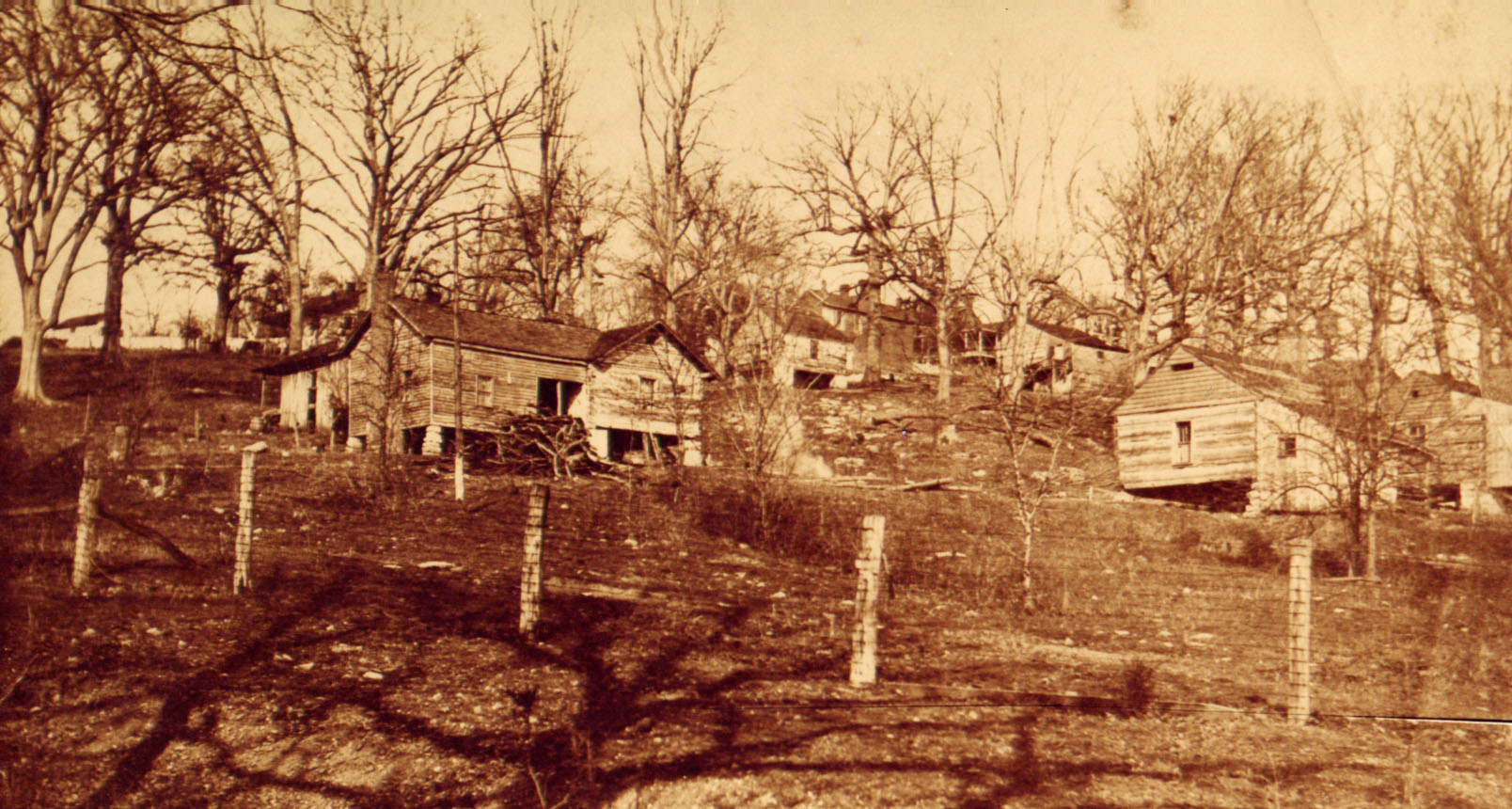
Wessyngton Slave Cabins
Housing for slaves varied from plantation to plantation depending on the owners. Most slave quarters were generally arranged in avenues or streets and located behind the mansion or ‘Big House.’ They were strategically placed to give the owner or overseer a clear view of the slaves, so their activities could be easily monitored.
The slave settlement at Wessyngton Plantation, however, did not fit this pattern. The lack of a clustered settlement pattern at Wessyngton was somewhat unusual during antebellum times. This was primarily due to the hilly topography of the plantation. The scattered pattern gave the slaves at Wessyngton more freedom and made it far more difficult to keep them under constant surveillance.
Typically, slave housing at Wessyngton consisted of hand-hewn one-room log cabins measuring 20 by 20 square feet with brick end chimneys. Some cabins were 18 by 36 square feet. Each cabin had log flooring and a loft, where children slept.
Each cabin housed an average of six individuals. Family sizes varied depending on the number births, deaths and marriages.
Tags:African American Family Life in Slavery, African Slavery, Antebellum Mansion, Antebellum Plantation, Big House, Civil War, Great House, Log Cabin, Log Housing, Overseer, Slave cabins, Slave Family, Slave Houses, Slave Housing, Slave Plantation
Posted in Civil War, Genealogy & DNA, Interviews, Introduction & Personal, Plantation Life, Research | Comments Closed
Tuesday, August 4th, 2009
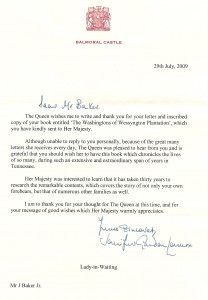
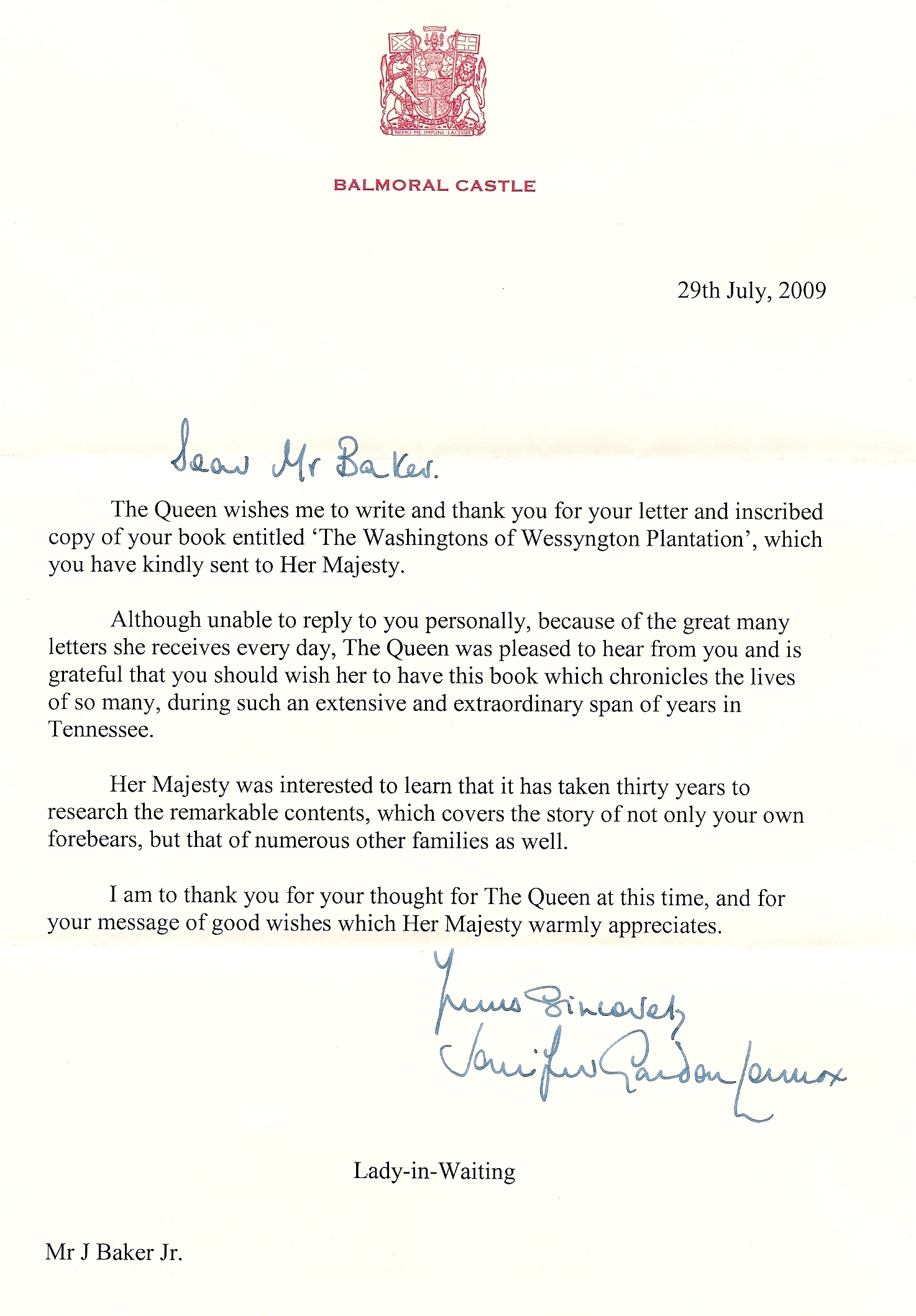
Letter from Queen Elizabeth
Queen Elizabeth acknowledged the receipt of a signed copy of my book. As is the custom, her lady-in-waiting wrote me. The royal seal indicated that the Queen was at her summer residence, Balmoral Castle in Scotland.
http://en.wikipedia.org/wiki/Balmoral_Castle– for your info.
Tags:African American History, Balmoral Castle, Buckingham Palace, Civil War, Genealogical Research, President Washington, Queen Elizabeth, Royal Family, Slavery, Tennessee history, Washington family
Posted in Civil War, Current Events, Genealogy & DNA, Interviews, Introduction & Personal, Plantation Life, Research | Comments Closed
Thursday, July 16th, 2009
On Saturday August 8th the Terry family will tour Wessyngton Plantation as part of their bi-annual family reunion. The group will tour the Wessyngton slave cemetery, the Washington family cemetery, the grounds around the mansion and a restored slave cabin. Members of the National Black Arts Festival from Atlanta will also attend the reunion festivities. Following the tour the group will dine at the Tennessee National Guard Armory. I will also autograph copies of my new book The Washingtons of Wessyngton Plantation: Stories of My Family’s Journey to Freedom. The Terrys descend from Dick Terry 1818-1879 and Aggy Washington Terry born 1824. Today there are more than 1,000 Terry family members.
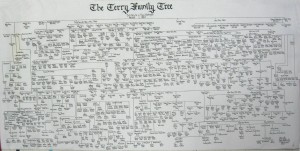
Terry Family Tree
Tags:Aggy Washington Terry, August 8th, Dick Terry, National Black Arts Festival, Slave Cabin, Slave Cemetery, Terry Family Reunion, Washington family
Posted in Book Tour & Reviews, Current Events, Genealogy & DNA, Interviews, Introduction & Personal, Plantation Life, Research, Uncategorized | Comments Closed