November 24th, 2009

In 1847 an enslaved African American, Dred Scott, went to trial to sue for his freedom. This case, which later became known as Dred Scott v. Sanford, impacted the citizenship of all African Americans throughout the United States.
Dred Scott was born a slave in Southampton County, Virginia and was owned by Peter Blow. Peter Blow was the great-nephew of Colonel Michael Blow who owned my ancestors before they were brought to Wessyngton Plantation by Joseph Washington.
Scott was taken to Alabama by the Blow family and later to St. Louis. After Peter Blow’s death in 1832, Scott was bought by an army surgeon Dr. John Emerson who took him to Illinois and the Wisconsin Territory.
Scott’s stay in Illinois and Wisconsin, where slavery was prohibited, gave him the legal standing to make a claim for his freedom. The abolitionists encouraged him to sue for his freedom. The case and appeals took ten years. In March 1857, the United States Supreme Court declared that all blacks, slaves as well as free blacks, were not, and could never become, citizens of the United States.
The decision was a victory for southern slaveholders, while northerners were outraged at its outcome. The Dred Scott case influenced the nomination of Abraham Lincoln to the Republican Party and his election that led to the South’s secession from the Union and ultimately the freedom of all African Americans.
Peter Blow’s sons, who had grown up with Dred Scott, helped him pay the legal fees for his lengthy case. After the Supreme Court’s decision, they purchased Scott and his wife and then emancipated them.
Dred Scott died nine months later—a free man.
.
Tags: Abraham Lincoln, Blow Family, Civil War, Confederate States, Declaration of Independence, Dr. John Emerson, Dred Scott, Dred Scott Decision, Frederick Douglass, Free Territory, Joseph Washington, Michael Blow, Missouri Compromise, Peter Blow, Runaway Slave Law, Scott vs. Sanford, Slave Laws, Southampton County Virginia, St. Louis, Supreme Court, Union Army
Posted in Civil War, Current Events, Genealogy & DNA, Interviews, Introduction & Personal, Plantation Life, Research | 2 Comments »
November 17th, 2009

On Tuesday November 4, 2008, President Barack Obama reflected on the life of Mrs. Ann Nixon Cooper: “she’s seen throughout her century in America─the heartache and the hope; the struggle and the progress; the times we were told we can’t; and the people who pressed on with that American creed: Yes, we can.”
Empowered and energized by this history-making presidential campaign, Mrs. Cooper told her story in her own voice. A Century and Some Change is the portrait of an American who lived a rewarding and culturally rich life.
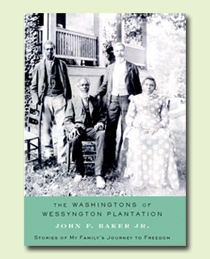
Mrs. Cooper was raised in Nashville in the home of her aunt-in-law Joyce Washington Nixon, who was born a slave at Wessyngton Plantation during the last days of the Civil War. I had the honor of interviewing Mrs. Cooper and recording her memories in my book The Washingtons of Wessyngton Plantation, which she mentioned in her book.
A Century and Some Change: My Life Before the President Called My Name will be released on January 5, 2010 by Atria Books, a division of Simon & Schuster. Mrs. Cooper passed away on December 21st at her home, nineteen days short of her 108th birthday.
Order A Century and Some Change by clicking the icon of her book cover
Tags: A Century and Some Change, Acceptance Speech, Al Cooper, Albert Berry Cooper II, Allen Berry, Andrew Young, Ann Nixon Cooper, Atlanta Georgia, Atria, Atria Books, Barack Obama, Before the President Called My Name, Berry Family, Bessie Dozier, Book: A Century and Some Change, CNN, Cooper Family, Coretta Scott King, Don Lemon, Elmwood, First Lady Obama, Frank Berry, George Washington, Granville Washington, Irene Nixon, Irene Washington, James Dozier, Jerry Nixon, John Baker Jr., Joyce Cooper Bobo, Joyce Washington Nixon, Karen Grigsby Bates, Martin Luther King Jr., Meharry, Michelle Obama, Nashville Tennessee, Nixon Family, Obama family, President Barack Obama, President Obama, President Washington, Presidential campaign, Presidential Election, Simon & Schuster, Stories of My Family's Journey to Freedom, W. W. Berry, Washington family, Washingtons of Wessyngton Plantation, Wessyngton Plantation, Yes We Can
Posted in Book Tour & Reviews, Civil War, Current Events, Interviews, Introduction & Personal, Plantation Life, Research | 4 Comments »
November 10th, 2009

Surnames of Wessyngton Slaves
Slaves were usually known by their first names, especially on small farms with few slaves. Plantation owners rarely recorded their slaves with surnames unless they had several individuals with the same first names. For that reason the use of surnames by slaves was far more common on large plantations where more people were likely to have the same given names.
Due to Wessyngton Plantation having such a large enslaved population many African Americans are listed with their previous owners’ surnames as early as the 1820s.
Slave bills of sale and other documents in the Washington Family Papers collection details the origins of many of these African American families.
The list above documents the names African Americans on Wessyngton Plantation who used surnames prior to emancipation and the date of their arrival on the plantation.
Tags: African American History, African American Surnames, African Slavery, Day Names, Given Names, Naming Patterns, Naming Practices, Plantation Records, plantation slavery, Slave Bills of Sale, Slave Names, Slave Surnames, slave trade, Tennessee slavery, United States slavery, Virginia Slavery
Posted in Civil War, Current Events, Genealogy & DNA, Interviews, Introduction & Personal, Plantation Life, Research | No Comments - Add new comment »
November 8th, 2009

Meet the Authors event, International Black Genealogy Summit
I just returned from a very exciting event—The first International Black Genealogy Summit held in Ft. Wayne, Indiana on October 29-31, 2009. Several hundred people participated. Throughout the conference I shared my research experience with genealogists. It was wonderful to speak with many people who had already read my book. The give and take of ideas illustrates that we are just at the beginning of a long and interesting journey to learn about our roots.
At the Meet the Authors event everyone could talk to the authors of books related to African American genealogy. The authors posed together for this photo. (L-R) Tony Burroughs who wrote Black Roots: A Beginners Guide To Tracing the African American Family Tree; myself; Tim Pinnick, author of Finding and Using African American Newspapers; and (Seated) Frazine Taylor, with her book Researching African American Genealogy in Alabama.
Tags: African American Genealogy, African American Newspapers, Alabama Genealogy, Black Roots, DNA Testing, family history, family research, family tree, Frazine Taylor, Genealogical Research, Genealogy and DNA, International Black Genealogy Summit, Tim Pinnick, Tony Burroughs
Posted in Book Tour & Reviews, Current Events, Genealogy & DNA, Interviews, Introduction & Personal, Plantation Life, Research | No Comments - Add new comment »
November 6th, 2009

White Sharecroppers on Wessyngton Plantation
After the Civil War several former Wessyngton slaves remained on the plantation. Others moved to Nashville, to the north, surrounding counties and some purchased their own farms.
When the former slaves left the area many white farmers and African Americans came to Wessyngton Plantation and became sharecroppers and resided in the former slave cabins.
Under the sharecropping system, the landowner received two thirds of the crop and the tenant or sharecropper only received one third of the crop. The sharecropper was provided a house, mules, land, seed and fetilizer. They raised crops of tobacco, corn, wheat and rye.
African American and white sharecroppers continued farming on Wessyngton Plantation until the property was sold by the Washington family in 1983 nearly 200 years after the plantation was founded.
Tags: Add new tag, Plantation, Sharecrop, Sharecropping, Slave cabins, Slave Housing, Tenant Farmers, Tenant Housing, Tobacco Production
Posted in Civil War, Genealogy & DNA, Interviews, Plantation Life, Research | 11 Comments »
November 2nd, 2009

Archaeological Dig at Wessyngton Slave Cabin Site
In 1991, I had an opportunity that few historians or genealogists ever have; to literally walk in your ancestors’ footsteps. In 1989 I was approached by the president of the Bloomington-Normal black history Project and director of the Midwestern archaeological research Center, about the potential investigations of the salve cabin area on Wessyngton Plantation to get an interpretation of slave life there. Similar digs have been conducted at the Hermitage, Mt. Vernon, and Monticello.
The actual digging at Wessyngton did not start until 1991. The thought of actually walking in my ancestors’ footsteps and holding objects they used in their everyday lives one hundred years earlier was surreal to me. Three sections of the slave cabin area were selected for exploration. One site was where the cabin of my great-great-grandparents Emanuel and Henny Washington once stood.
The dig yielded fragments of pottery and dishes used by my ancestors as well as coins and arrowheads made by Native Americans.
The photograph above shows the site of the archaeological dig on Wessyngton Plantation where my ancestors once lived.
Tags: African American History, African Slavery, Arrowheads, black history, Black History Month, Civil War, Monticello, Mt. Vernon, Native Americans, Plantation Archaeology, plantation slavery, Slave Cabin, Slave Housing, Slave Life, Tennessee slavery, The Hermitage
Posted in Civil War, Genealogy & DNA, Interviews, Introduction & Personal, Plantation Life, Research | No Comments - Add new comment »
October 26th, 2009

Blow Family Bible
Slave owners kept detailed records of their slaves’ births, and deaths, and purchases; although many of them have not survived. They often recorded these events in their family bibles along with information on their own families.
The 1715 Blow family bible records the births of slaves owned by the Blows of Sussex, and Southampton counties in Virginia. Nineteen births of four mothers are recorded from 1737 to 1763 spanning three generations. This is a goldmine of information for African American research. Descendants of these slaves can be found searching other records in the Blow Family Papers in the Swem Library in Virginia.
Tags: African American History, African American Names, African Slaves, Black Genealogy, Blow Family, Blow Family Bible, family history, family research, Genealogy & DNA, George Blow, Michael Blow, plantation slavery, Richard Blow, Samuel Blow, Slave Bill of Sale, Slave Name Patterns, Slave Names, Slave Records, slave trade, Southampton County Virginia, Sussex County Virginia, Swem Library, Tower Hill Plantation, Transatlantic Slave Trade, Virginia Plantation, Virginia Slavery
Posted in Civil War, Genealogy & DNA, Interviews, Introduction & Personal, Plantation Life, Research | 17 Comments »
October 23rd, 2009

Arry Fort Pitt 1836-1918
Today divorce is very common, but in 1800s and early 1900s it was rarely heard of, especially among African Americans. In my research I found this extraordinary divorce case of two former slaves in Robertson County, Tennessee which detailed the history of their family.
Alford Pitt 1830-1900 and his wife Arry Fort Pitt 1836-1918 were married during slavery and had eleven children. Alford was a carpenter and later accumulated more than 500 acres of land. He had African American and white sharecroppers working his land.
In 1900, Arry filed for divorce from Alford stating that he had an affair with two black women and one white one. She stated that she had worked hard to help him amass everything they owned and she was entitled to half. Alford claimed that she had not helped him accumulate his wealth and felt since they married during slavery and never married after they were emancipated that she was not legally his wife and therefore not entitled to any of his property.
The divorce case put a great strain on the Pitt family, their friends and neighbors. Arry had more than fifty witnesses to prove her claims and Alford had nearly as many to support his. Half the children sided with their mother and the others their father.
Arry was represented in court by a family member of her former owners. In 1866, a law was passed in Tennessee which made all former slave marriages legal if the couple continued to live as man and wife.
The courts ordered Alford to give Arry 100 acres of land, $1,000, a horse and buggy and other livestock. Shortly after the verdict Alford died from complications of a cold that he caught from walking to court in bad weather.
Some of the Pitt property is still owned by their direct descendants. A street that runs through the property bears the family name.
Tags: African American Genealogy, African American History, Black Landowners, Divorce, Divorce Cases, Emancipation, family history, family research, Freedmen, Freedmens Bank, Freedmens Bureau, Genealogy & DNA, Oral History, Pitt Family, Slave Family, Slave Marriage, Slavery
Posted in Genealogy & DNA, Interviews, Introduction & Personal, Plantation Life, Research | 7 Comments »
October 20th, 2009

Names Among Wessyngton Slaves
African Americans got their given or first names from various sources during the slavery. Some of them used African “day names” such as Cudjo, Mingo, and Cuffee, denoting the day of the week on which they were born. Others used names from the Bible, classical names, place names, names of plantation owner’s families, famous individuals like the presidents and their own family members.
The document above lists various sources of names of individuals enslaved on Wessyngton Plantation from 1796 to 1865.
Tags: African American History, African American Names, African American slavery, African Names, Biblical Names, Day Names, Naming Practices, Slave Names
Posted in Civil War, Genealogy & DNA, Interviews, Plantation Life, Research | No Comments - Add new comment »
October 18th, 2009

Joseph Washington 1895-2002
In more than thirty years of researching my ancestry and the lives of African Americans enslaved on Wessyngton Plantation, I have had the honor of interviewing more than twenty individuals whose parents or grandparents lived on the plantation. These individuals ranged in age from eighty to 107 years old.
Although I found hundreds of documents about my ancestors from plantation records written by the owners of Wessyngton, I learned many personal things about my ancestors from conducting interviews with elder family members.
In 1994, I visited my cousin Joseph Washington 1895-2002 (pictured above) at his home in Mansfield, Ohio on his one hundred second birthday. As a child Joseph lived next door to my great-great-grandparents Emanuel and Henny Washington who were born at Wessyngton in the early 1800s. He related many stories about them to me including ghost stories that my great-great-grandfather used to tell all the children on the plantation and songs he used to sing. Joseph told me what life was like on the plantation when he grew up there and how many people on the plantation were related to one another.
Oral history is a vital key to tracing African American genealogy and provides many details about our ancestors that can’t be found in records.
Tags: African American History, African American Oral History, African American slavery, Black Genealogy, black history, Civil War, family history, Griot, Interviews, Joseph Washington, Oral History, Oral Tradition, plantation slavery, Plantations, Tennessee history, Tennessee slavery
Posted in Civil War, Current Events, Interviews, Plantation Life, Research | No Comments - Add new comment »