The entire Court Order book collection of the Southampton County, Virginia Court from 1749 through the early 1880s has been digitalized. This includes 57,000 pages, involving approximately one million names. This information is free online at: www.wiki.familysearch.org/en/Southampton_County,_Virginia. This collection is a goldmine for African Americans tracing their ancestors who once lived in Southampton County. Many of the books that have been digitized were 300 to 700 pages. Court Order books from the 1700s to the end of the slave trade lists the names of Africans when they were first brought to the area, their ages, owner’s names, and in a few cases the ships on which they were brought over. Wills and estate settlements lists the names of slaves, descriptions and family relationships. If your ancestors came from Southampton County, Virginia, you must check out this collection. Thanks go to Southampton Circuit Court Clerk, Richard Francis, and the volunteers of the Brantley Association of America who undertook this huge project in 2009 and 2010.
Posts Tagged ‘Virginia Slavery’
Digitalization of Southampton County Virginia Records Opens New Doors for African American Research
Sunday, April 17th, 2011Nat Turner’s Rebellion of 1831
Monday, December 21st, 2009


In 1831, Nat Turner led the largest slave rebellion in the history of the United States. Turner, born in 1800 in Jerusalem, Southampton County, Virginia. Wessyngton Plantation’s founder Joseph Washington lived in Southampton County before he came to Tennessee. Many of the slaves on Wessyngton Plantation were brought by Joseph to Tennessee.
In Virginia, Turner, a self-proclaimed Baptist minister, was known as “The Prophet” to the enslaved African Americans and often conducted services for them. He claimed to be given visions by God, and that he was ordained to lead his people to freedom. Unlike most slaves and many whites, Turner was able to read and write.
Turner’s group of followers was composed of more than 50 fellow slaves and free blacks. During the insurrection of 1831, the group went through the countryside of Southampton County killing 55 men, women, and children. The insurrection lasted for two days before the local militia put it down. Turner and several of the leaders were executed; others were transported out of the area.
The Turner rebellion put fear in the hearts and minds of slave holders throughout the South, which led to laws further restricting the activities of enslaved African Americans and free blacks.
The revolt influenced the Tennessee legislature to pass laws in 1831 that prevented more free blacks from entering the state. Any person emancipating a slave had to send him out of the state. When the new constitution in Tennessee was written in 1834, free blacks were denied voting privileges.
Use of Surnames Among African Americans Before Emanicaption
Tuesday, November 10th, 2009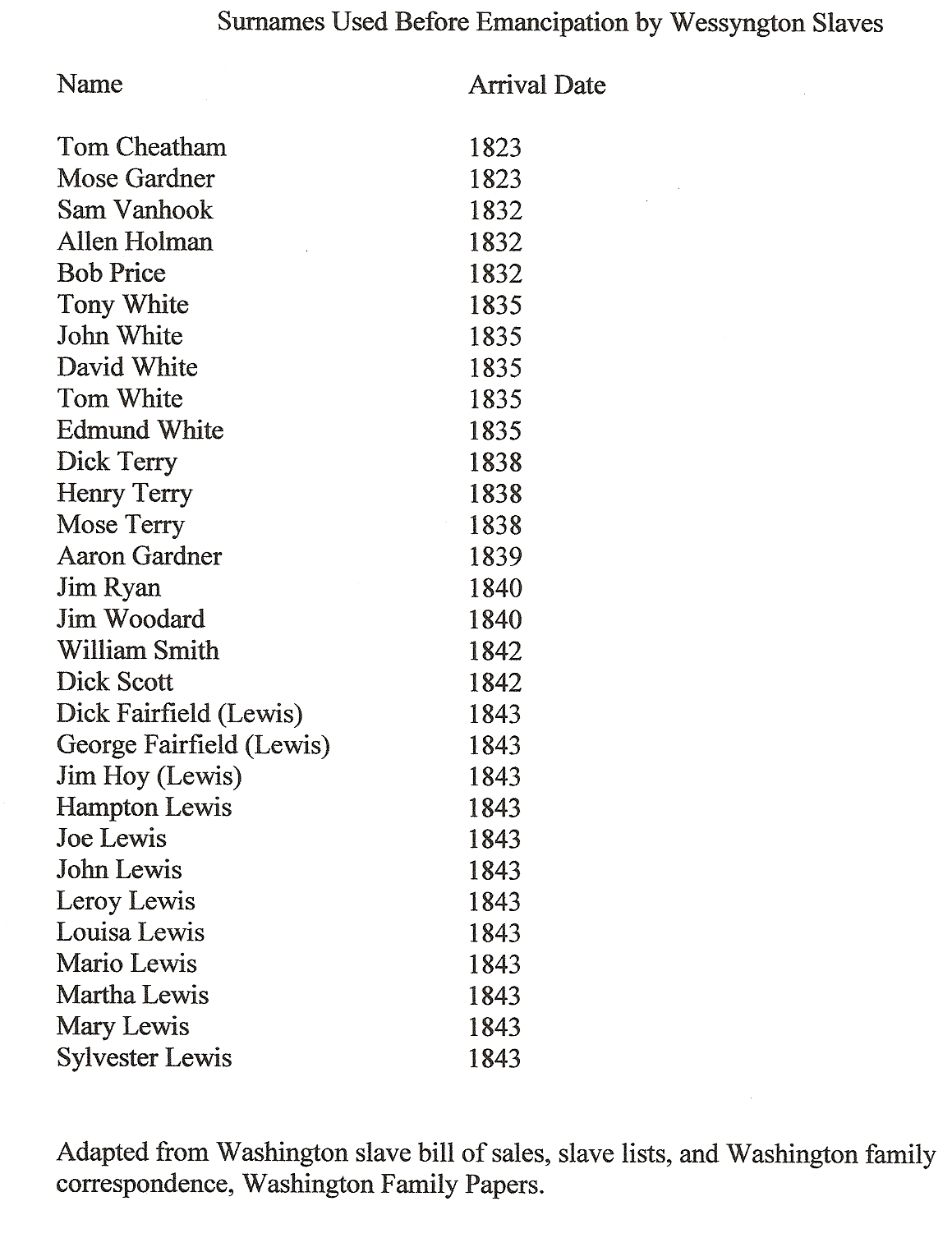
Surnames of Wessyngton Slaves
Slaves were usually known by their first names, especially on small farms with few slaves. Plantation owners rarely recorded their slaves with surnames unless they had several individuals with the same first names. For that reason the use of surnames by slaves was far more common on large plantations where more people were likely to have the same given names.
Due to Wessyngton Plantation having such a large enslaved population many African Americans are listed with their previous owners’ surnames as early as the 1820s.
Slave bills of sale and other documents in the Washington Family Papers collection details the origins of many of these African American families.
The list above documents the names African Americans on Wessyngton Plantation who used surnames prior to emancipation and the date of their arrival on the plantation.
Slave Owner’s Family Bible Documents Slave Births During the 1700s
Monday, October 26th, 2009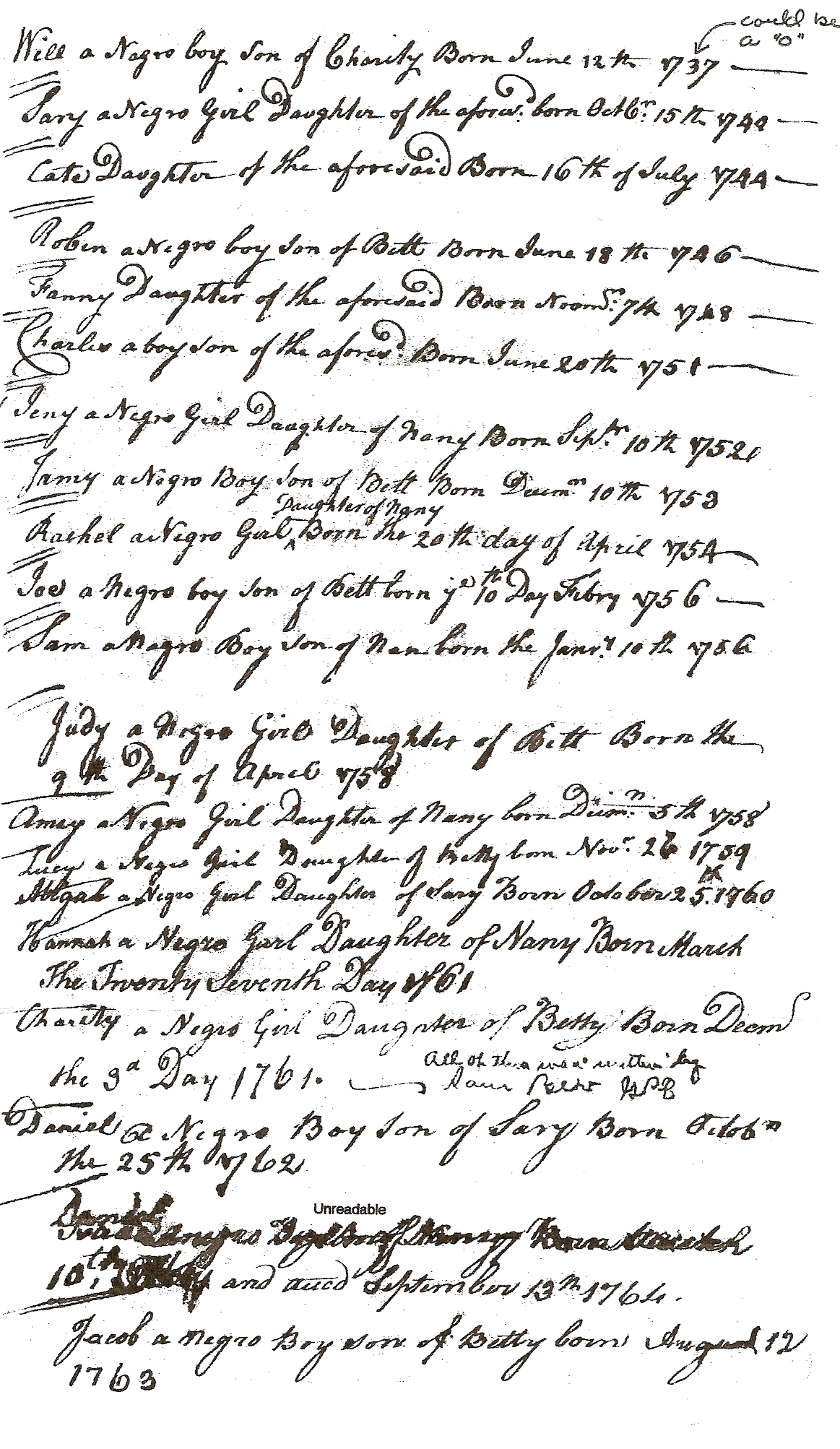
Blow Family Bible
Slave owners kept detailed records of their slaves’ births, and deaths, and purchases; although many of them have not survived. They often recorded these events in their family bibles along with information on their own families.
The 1715 Blow family bible records the births of slaves owned by the Blows of Sussex, and Southampton counties in Virginia. Nineteen births of four mothers are recorded from 1737 to 1763 spanning three generations. This is a goldmine of information for African American research. Descendants of these slaves can be found searching other records in the Blow Family Papers in the Swem Library in Virginia.